Sormila Acharjee

Author name: Sormila Acharjee

Facebook

Build Highly Converting Facebook Ad Campaign in 2026

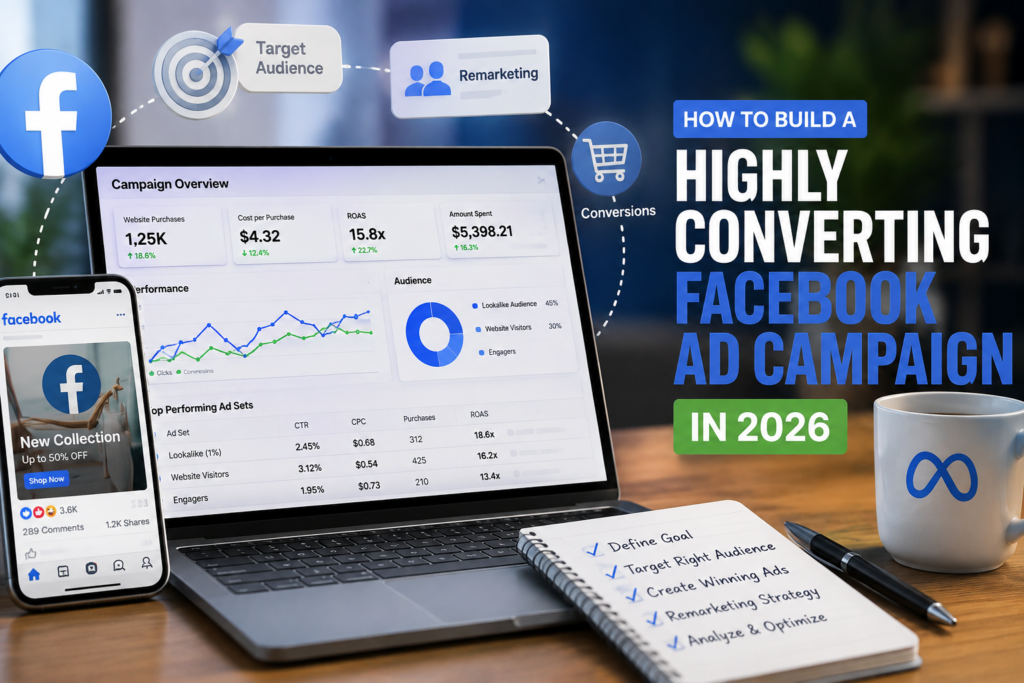
How to Build a Highly Converting Facebook Ad Campaign in 2026 In today’s digital landscape, simply “boosting” a post on Facebook is no longer enough to generate consistent sales. To truly maximize your Return on Ad Spend (ROAS) and turn clicks into loyal customers, you need a strategic, data-driven approach to Meta Ads. Whether you are launching a new product or trying to scale your online revenue, here is a step-by-step guide to setting up a highly converting Facebook and Instagram ad campaign. 1. Define a Clear Objective & Target Audience The foundation of any successful campaign is knowing exactly what you want to achieve (e.g., brand awareness, lead generation, or website purchases). Once your goal is set, dive deep into audience targeting. For instance, if you are scaling an apparel brand like KAZE MART, your audience targeting shouldn’t just be “people who like clothes.” You need to utilize detailed demographics, behavioral targeting, and lookalike audiences based on your best-performing customer profiles to ensure your ads are shown to high-intent buyers. 2. Craft Scroll-Stopping Creatives and Copy Your audience is scrolling fast. You have less than 3 seconds to grab their attention. 3. The Power of Remarketing (Where the Magic Happens) Most users will not buy your product the first time they see it. This is why a strategic remarketing funnel is essential. By tracking user behavior through the Meta Pixel, you can retarget specific groups: Pro-Tip: Remarketing campaigns are incredibly cost-effective. By targeting warm audiences who already know your brand, it is entirely possible to generate massive e-commerce revenue with minimal ad spend, sometimes hitting a 15x+ ROAS. 4. Analyze, Optimize, and Scale A successful digital marketer never launches an ad and forgets about it. You need to constantly monitor your Facebook Ads Manager dashboard. Pay close attention to: Once you identify the winning ad sets, start reallocating your budget to those top performers and turn off the ones eating up your money. Final Thoughts Running successful Facebook ad campaigns requires a mix of creative psychology and advanced data analytics. By structuring your campaigns correctly and implementing a powerful remarketing strategy, you can transform your ad account into a predictable revenue-generating machine.
Uncategorized

How to Launch a Highly Profitable Google Ads Campaign in 2026

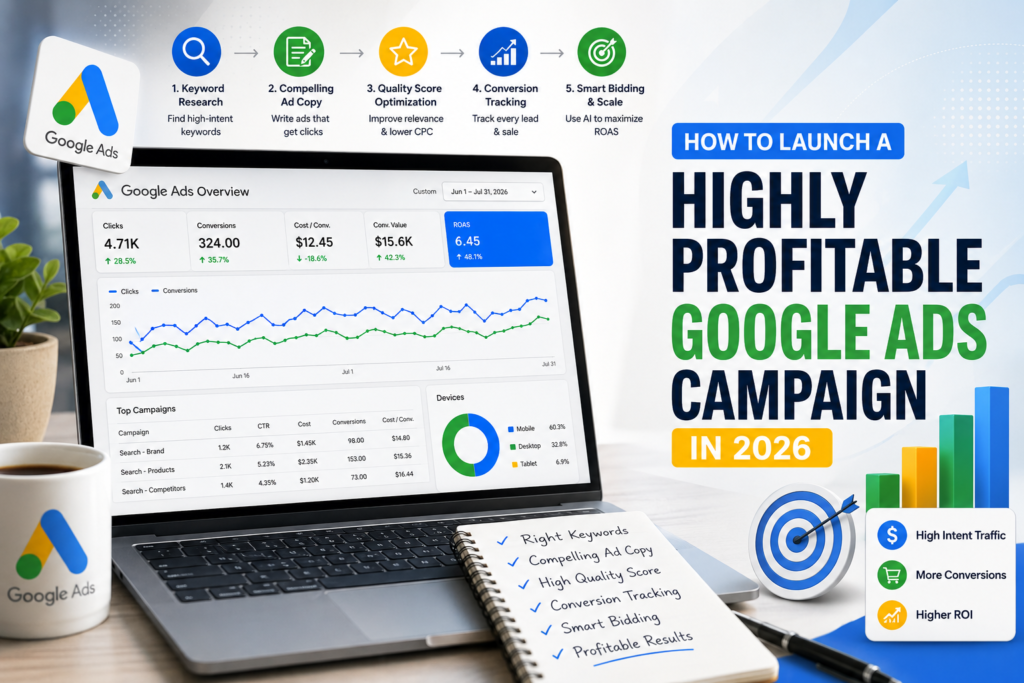
How to Launch a Highly Profitable Google Ads Campaign in 2026 While social media ads are great for building brand awareness, Google Ads is the ultimate powerhouse for capturing high-intent buyers. When someone searches for a product or service on Google, they aren’t just browsing—they are actively looking for a solution. If you want to place your brand directly in front of customers who are ready to buy, here is a step-by-step guide to building a highly profitable Google Ads campaign. 1. Master Your Keyword Research (The Foundation) The success of your Google Search campaign depends entirely on selecting the right keywords. You need to focus on “commercial intent” rather than just high search volume. Broad vs. Exact Match: Avoid using too many Broad Match keywords when starting out, as they can drain your budget on irrelevant searches. Focus on Phrase Match and Exact Match to maintain tight control over who sees your ad. Negative Keywords: This is the secret weapon of profitable campaigns. By constantly updating your Negative Keyword list, you prevent your ads from showing up for cheap, irrelevant searches (e.g., adding “free” or “cheap” if you sell premium products). 2. Write Compelling, Action-Oriented Ad Copy Your ad copy needs to stand out in a sea of text-based search results. To maximize your Click-Through Rate (CTR): Include your target keyword in the Headline. Highlight your Unique Selling Proposition (USP)—what makes you better than the competitors? (e.g., “Free Shipping,” “24/7 Support,” “Save 20% Today”). Use all available Ad Extensions (Sitelinks, Callouts, Structured Snippets). Extensions make your ad physically larger on the screen and give users more reasons to click. 3. Optimize for Quality Score Google doesn’t just reward the highest bidder; it rewards the most relevant ad. Your Quality Score (ranked from 1 to 10) directly affects your Cost Per Click (CPC). To get a high Quality Score, ensure that: Your chosen keywords directly match your Ad Copy. Your Ad Copy directly aligns with your Landing Page content. Your Landing Page loads fast, is mobile-friendly, and provides a seamless user experience. 4. Conversion Tracking & Smart Bidding Never run a Google Ad campaign without proper tracking. Make sure your Google Tag and conversion actions (like ‘Purchases’ or ‘Lead Form Submissions’) are perfectly set up. Once your campaign has gathered enough data (usually 15-30 conversions in a month), you can switch from Manual CPC to Smart Bidding strategies like Target CPA (Cost Per Action) or Target ROAS (Return on Ad Spend). This allows Google’s AI to optimize your bids in real-time, finding you the most profitable customers automatically. Final Thoughts Running a successful Google Ads campaign requires a perfect balance of data analysis, keyword strategy, and copywriting. When done correctly, it provides the most predictable and scalable ROI of any digital marketing channel.

SEO

The Ultimate Guide to SEO : How to Rank on First Page

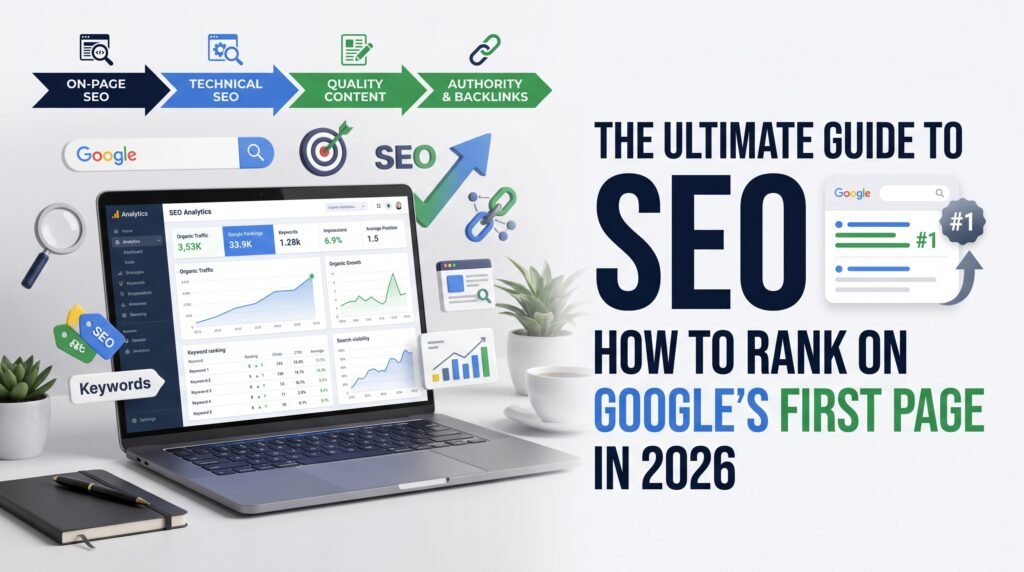
The Ultimate Guide to SEO in 2026: How to Rank on Google’s First Page While paid ads bring instant traffic, Search Engine Optimization (SEO) builds a long-term, sustainable online empire. When your website ranks on the first page of Google, you generate continuous, high-quality organic traffic without paying for every single click. However, SEO is constantly evolving. What worked five years ago won’t work today. If you want to dominate search engine results and outrank your competitors, here are the core pillars of a successful SEO strategy. 1. On-Page SEO & Search Intent Matching Gone are the days of keyword stuffing. Today, Google’s algorithm strictly focuses on Search Intent—understanding exactly what the user is looking for and providing the most relevant answer. Title Tags & Meta Descriptions: Craft compelling meta tags that include your primary keyword and encourage users to click. Header Tags (H1, H2, H3): Structure your content logically. This helps both readers and search engine bots understand your page’s hierarchy. Internal Linking: Connect related pages within your website to keep users engaged and help search engines crawl your site more effectively. 2. Technical SEO (The Invisible Backbone) You could have the best content in the world, but if your website has technical flaws, Google won’t rank it. Technical SEO ensures search engines can crawl and index your site without issues. Site Speed: A slow website kills conversions and rankings. Optimize your images (use WebP format), minimize heavy scripts, and utilize caching. Mobile Responsiveness: Google uses mobile-first indexing. Your website must look and function flawlessly on smartphones. Core Web Vitals: Pay attention to loading performance, interactivity, and visual stability. 3. High-Quality, Value-Driven Content Content is still king, but quality matters more than ever. Google prioritizes content that demonstrates E-E-A-T (Experience, Expertise, Authoritativeness, and Trustworthiness). Write comprehensive, well-researched articles that genuinely solve your target audience’s problems. Keep your content updated regularly to ensure it remains relevant and accurate. 4. Authority Building (White-Hat Link Building) Off-page SEO is all about building your website’s reputation across the internet. The most powerful way to do this is by acquiring high-quality backlinks. Focus on contextual, dofollow backlinks from authoritative websites within your niche. Avoid spammy link farms. A few links from high-authority domains carry significantly more weight than thousands of low-quality links. Final Thoughts SEO is not a one-time setup; it is a continuous process of optimization, monitoring, and adapting. By combining strong technical foundations, highly relevant content, and authoritative backlinks, you can secure long-term visibility and massive organic growth for your brand. Want to see your website on the first page of Google? Explore my SEO portfolio to see real-world ranking results, or contact me today to start your organic growth journey!

Google Marketing

How AI Is Changing Digital Marketing in 2026

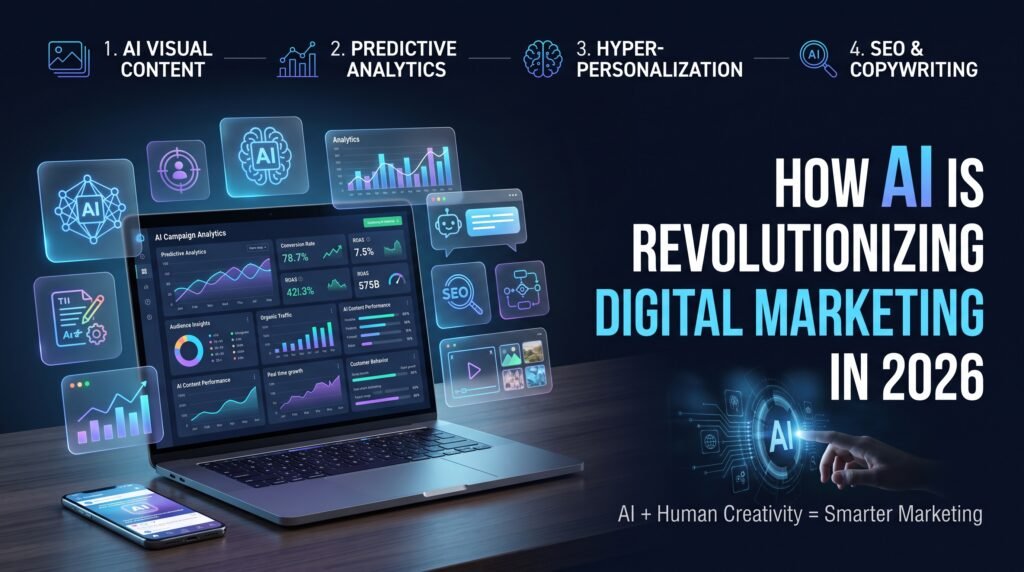
How AI is Revolutionizing Digital Marketing and Content Creation in 2026 Artificial Intelligence (AI) is no longer just a futuristic concept or a trending buzzword—it is the core driving force behind successful digital marketing in 2026. From automating tedious tasks to generating hyper-realistic visual content, AI is completely transforming how brands connect with their audiences. If you want to stay ahead of the competition and scale your business, embracing AI-driven marketing strategies is now a necessity, not an option. Here is how AI is reshaping the digital landscape. 1. Next-Level Visual Content Generation Visuals are the heartbeat of social media marketing. Previously, creating high-quality brand assets, cinematic video sequences, or hyper-realistic images required massive budgets and weeks of production. Today, AI-powered tools allow marketers to generate stunning, professional-grade visuals in a fraction of the time. Whether it is text-to-video generation or dynamic photo manipulation, AI empowers brands to produce highly engaging, scroll-stopping creatives at scale without compromising on quality. 2. Predictive Analytics and Smart Targeting Running ad campaigns without data is like shooting in the dark. AI algorithms can now analyze massive amounts of consumer data in real-time, predicting future buying behaviors with incredible accuracy. Platforms like Google Ads and Meta Ads utilize AI to optimize bidding strategies (like Target ROAS) and serve your ads exactly to the people who are most likely to convert. This means lower acquisition costs and significantly higher profit margins. 3. Hyper-Personalized Customer Experiences Modern consumers expect personalization. AI makes it possible to deliver tailored experiences to thousands of users simultaneously. From intelligent chatbots providing 24/7 customer support to dynamic email marketing campaigns that change content based on a user’s past purchases, AI ensures every customer feels uniquely valued. 4. SEO and Copywriting Automation Writing SEO-optimized content that ranks on the first page of Google requires a deep understanding of search intent. AI tools now assist marketers in identifying keyword gaps, analyzing top-ranking competitors, and generating structured content outlines. While the human touch is still essential for brand voice, AI drastically speeds up the drafting and optimization process. Final Thoughts AI is not here to replace digital marketers or creators; it is here to empower them. Brands that adapt to AI-driven tools will operate faster, smarter, and more profitably. The future of digital marketing belongs to those who know how to combine strategic human creativity with the limitless potential of Artificial Intelligence.

Facebook

How to Build a Highly Converting Facebook Ad Campaign in 2026

How to Build a Highly Converting Facebook Ad Campaign in 2026 In today’s digital landscape, simply “boosting” a post on Facebook is no longer enough to generate consistent sales. To truly maximize your Return on Ad Spend (ROAS) and turn clicks into loyal customers, you need a strategic, data-driven approach to Meta Ads. Whether you are launching a new product or trying to scale your online revenue, here is a step-by-step guide to setting up a highly converting Facebook and Instagram ad campaign. 1. Define a Clear Objective & Target Audience The foundation of any successful campaign is knowing exactly what you want to achieve (e.g., brand awareness, lead generation, or website purchases). Once your goal is set, dive deep into audience targeting. For instance, if you are scaling an apparel brand like KAZE MART, your audience targeting shouldn’t just be “people who like clothes.” You need to utilize detailed demographics, behavioral targeting, and lookalike audiences based on your best-performing customer profiles to ensure your ads are shown to high-intent buyers. 2. Craft Scroll-Stopping Creatives and Copy Your audience is scrolling fast. You have less than 3 seconds to grab their attention. 3. The Power of Remarketing (Where the Magic Happens) Most users will not buy your product the first time they see it. This is why a strategic remarketing funnel is essential. By tracking user behavior through the Meta Pixel, you can retarget specific groups: Pro-Tip: Remarketing campaigns are incredibly cost-effective. By targeting warm audiences who already know your brand, it is entirely possible to generate massive e-commerce revenue with minimal ad spend, sometimes hitting a 15x+ ROAS. 4. Analyze, Optimize, and Scale A successful digital marketer never launches an ad and forgets about it. You need to constantly monitor your Facebook Ads Manager dashboard. Pay close attention to: Once you identify the winning ad sets, start reallocating your budget to those top performers and turn off the ones eating up your money. Final Thoughts Running successful Facebook ad campaigns requires a mix of creative psychology and advanced data analytics. By structuring your campaigns correctly and implementing a powerful remarketing strategy, you can transform your ad account into a predictable revenue-generating machine.
Scroll to Top