How AI Is Changing Digital Marketing in 2026
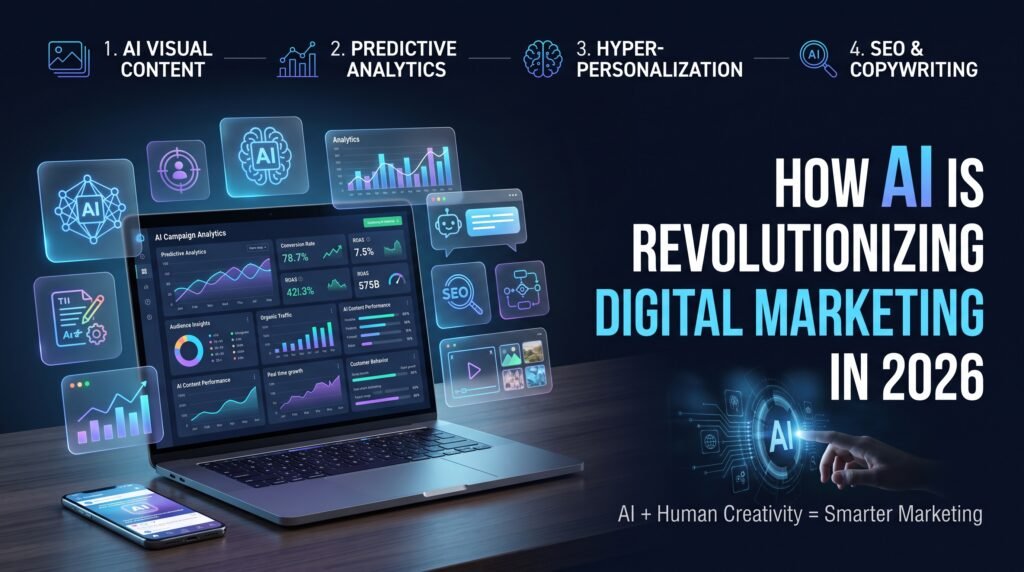
How AI is Revolutionizing Digital Marketing and Content Creation in 2026 Artificial Intelligence (AI) is no longer just a futuristic concept or a trending buzzword—it is the core driving force behind successful digital marketing in 2026. From automating tedious tasks to generating hyper-realistic visual content, AI is completely transforming how brands connect with their audiences. If you want to stay ahead of the competition and scale your business, embracing AI-driven marketing strategies is now a necessity, not an option. Here is how AI is reshaping the digital landscape. 1. Next-Level Visual Content Generation Visuals are the heartbeat of social media marketing. Previously, creating high-quality brand assets, cinematic video sequences, or hyper-realistic images required massive budgets and weeks of production. Today, AI-powered tools allow marketers to generate stunning, professional-grade visuals in a fraction of the time. Whether it is text-to-video generation or dynamic photo manipulation, AI empowers brands to produce highly engaging, scroll-stopping creatives at scale without compromising on quality. 2. Predictive Analytics and Smart Targeting Running ad campaigns without data is like shooting in the dark. AI algorithms can now analyze massive amounts of consumer data in real-time, predicting future buying behaviors with incredible accuracy. Platforms like Google Ads and Meta Ads utilize AI to optimize bidding strategies (like Target ROAS) and serve your ads exactly to the people who are most likely to convert. This means lower acquisition costs and significantly higher profit margins. 3. Hyper-Personalized Customer Experiences Modern consumers expect personalization. AI makes it possible to deliver tailored experiences to thousands of users simultaneously. From intelligent chatbots providing 24/7 customer support to dynamic email marketing campaigns that change content based on a user’s past purchases, AI ensures every customer feels uniquely valued. 4. SEO and Copywriting Automation Writing SEO-optimized content that ranks on the first page of Google requires a deep understanding of search intent. AI tools now assist marketers in identifying keyword gaps, analyzing top-ranking competitors, and generating structured content outlines. While the human touch is still essential for brand voice, AI drastically speeds up the drafting and optimization process. Final Thoughts AI is not here to replace digital marketers or creators; it is here to empower them. Brands that adapt to AI-driven tools will operate faster, smarter, and more profitably. The future of digital marketing belongs to those who know how to combine strategic human creativity with the limitless potential of Artificial Intelligence.